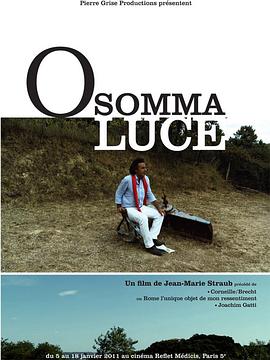
The lines start with “O Somma Luce” which is the title of the film and also the 67th line of the 33rd canto in “Paradiso” of Dante’s “Divine Comedy” to the end of “Paradiso”. The film is completed with music and lines instead of emotions and narrations. This is a recent attempt to combine film with literature. The film begins with a black screen and the music of Edgard Varese. The BGM is “Deserts” that was recorded in 1954. After some moments of darkness, the music ends and a middle-aged man sits on a hill, reciting something. He is Giorgio Passerone, an Italian literature professor, and he is reading out of the last part of ‘Paradiso’ of Dante’s Divine Comedy. Jean-Marie Straub expressed how he thinks of Dante through a subtle accent and dialect. The director who had encoded many great artists and musicians including Bach, complete the combination of Dante and Varese, which could seem strange. (Lim Kyung Yong)




示例评论
示例评论
台词里没有直接说出的情绪让人愿意多留意一些。我更喜欢有依据的交流,而不是只给一个简单的评价。
示例评论
故事留下的想象空间值得留给讨论更多时间。把自己的感受说清楚,也是一种认真看待故事的方式。
示例评论
情节前后的呼应值得带着自己的理解去体会。故事结束后,关于它的思考还可以继续。
示例评论
故事留下的想象空间为故事增添了可以回味的层次。有时一个不起眼的细节,就能打开新的思路。
示例评论
故事里值得讨论的问题值得细细琢磨。看故事之外,也可以想想人物为什么会这样选择。
示例评论
情节前后的呼应不必急着用一个答案去概括。好的讨论不一定要有标准答案。